Why SMART Board interactive displays for defense and federal environments

TAA compliant & NDAA compliant procurement
SMART interactive displays include TAA compliant and NDAA compliant models meeting defense and federal acquisition requirements. Available through GSA via authorized resellers, supporting streamlined procurement across defense agencies, commands, and high-security military environments.
View GSA purchasing information
Secure for controlled and classified environments
Supports deployment in high-security and restricted environments with configurations that remove wireless connectivity, Bluetooth, microphones, and other data-sensitive components, meeting strict data control and compliance requirements for classified and mission-critical operations.
Explore the M Pro high secuere series TAA
Real-time visualization & mission planning
Visualize, annotate, and share mission-critical information directly on live content, including maps, operational data, and briefing materials, to support planning, coordination, and decision-making across defense and federal teams.
Discover SMART Ink for government
Reliable in mission-critical operations
Engineered for consistent performance in defense and federal environments where operational continuity is non-negotiable, supporting continuous operation during active missions, briefings, and command workflows.
See SMART government displays in actionTrusted by government agencies across North America

Interactive display portfolio for defense and federal agencies
-
TAA & NDAA compliant displays
-
Additional government displays
TAA & NDAA compliant displays
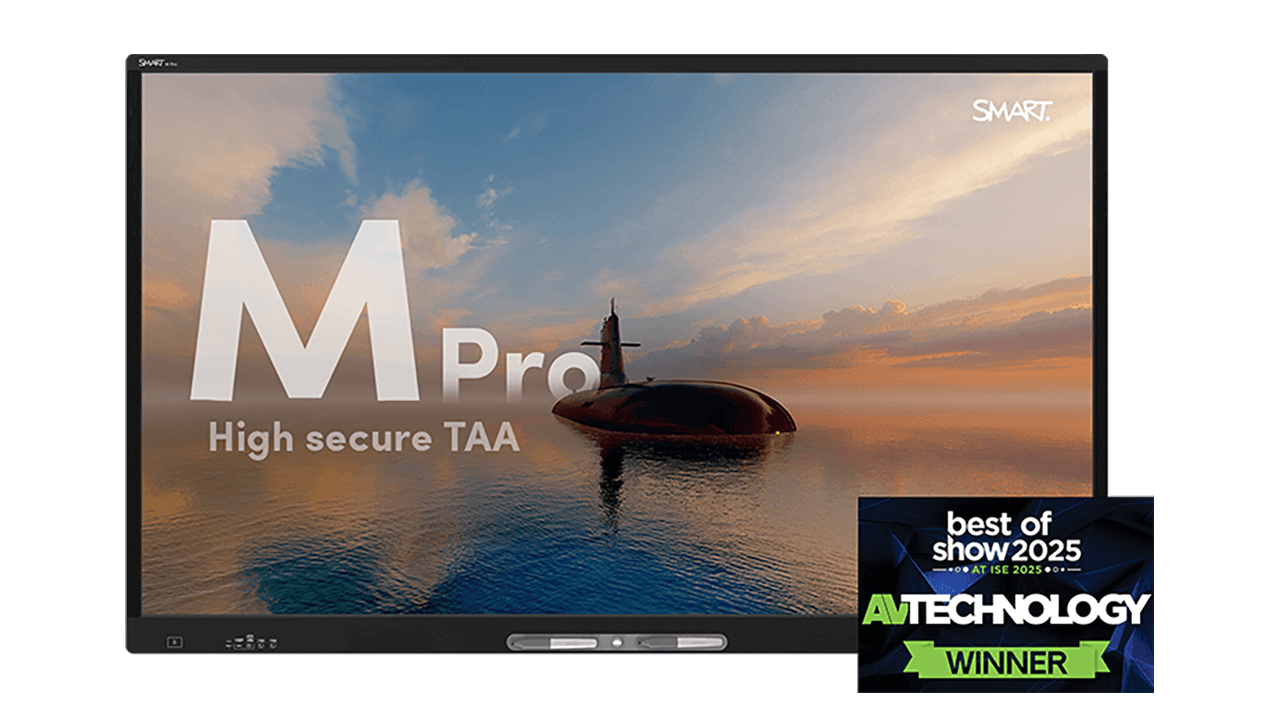
M Pro High Secure series TAA
Designed for high-security and controlled environments, without wireless connectivity, microphones, and other data-sensitive components. Supports TAA compliant and NDAA compliant deployment, making it ideal for defense operations, command environments, and secure facilities.
- TAA & NDAA compliant, GSA eligible
- Wireless, Bluetooth & microphone removed by design
- OS-free architecture
- Restricted USB access
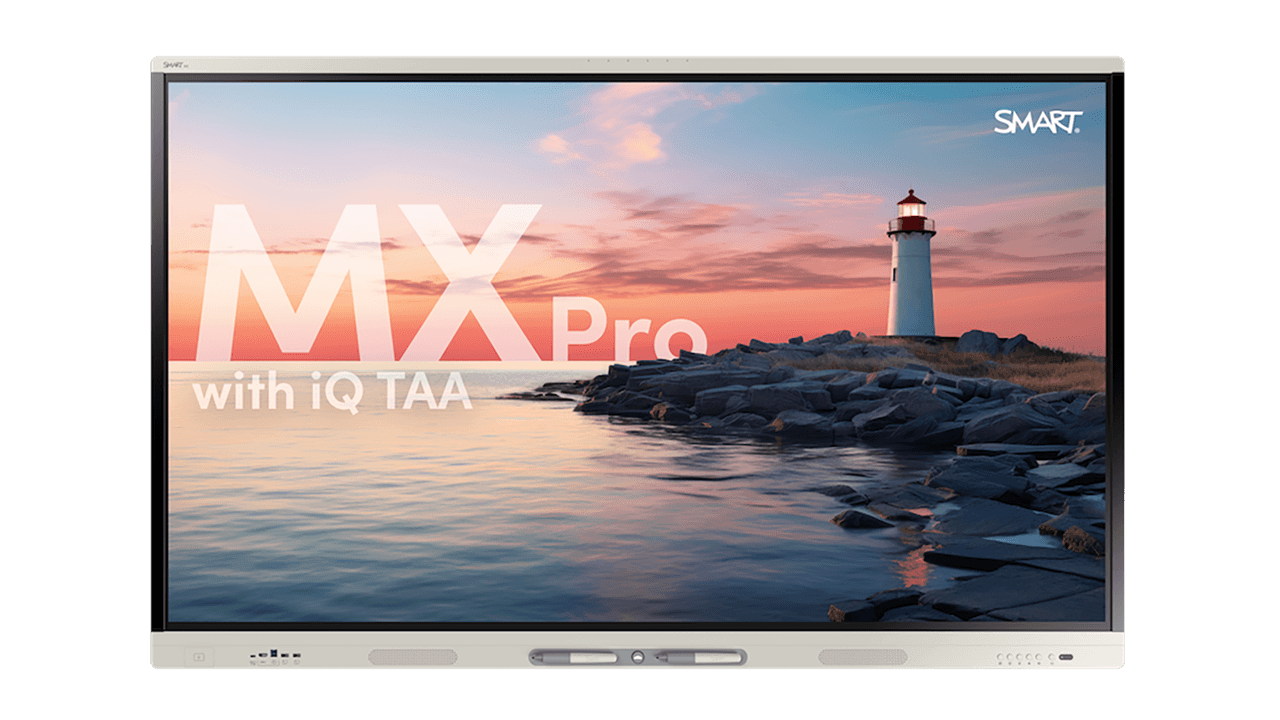
MX Pro series with iQ TAA
A TAA compliant interactive display with an embedded operating system, wireless connectivity, and microphone support, suited for defense training environments, simulation facilities, and less restricted federal applications where collaboration flexibility and mission readiness are priorities.
- TAA compliant & GSA eligible
- Embedded iQ operating system
- Built-in wireless connectivity
- Integrated microphone support
Additional government displays

T Pro series
An OS-free, plug-and-play interactive display built around QLED technology with Dolby Vision support, delivering exceptional color accuracy and visual clarity for government briefing rooms, training facilities, and administrative environments. Well suited for government applications where TAA compliance is not a procurement requirement but display quality and operational flexibility are priorities.
- OS-free & plug-and-play
- QLED display with Dolby Vision
- 100W USB-C power delivery
- Compatible with SMART OPS modules

SMART Board Mini Interactive Podium
A compact 27” interactive display designed for operators to present while facing their audience. Supports mission planning, training sessions, and briefings, enabling clear communication and real-time interaction in operational environments.
- Built-in 4K camera, 8-mic array & 12W audio
- OPS PC module slot; the only interactive podium with this capability
- 120° adjustable tilt
- Mirrors to any external display via HDMI or USB-C
Key capabilities for defense and federal operations


Effortless multi-user annotation
The ONLY interactive display to enable multiple users to write, erase, and interact simultaneously across applications and content types, supporting dynamic mission planning, operational briefings, and real-time coordination without disrupting active workflows.

High secure deployment
Configured for high-security and restricted environments with options that remove wireless connectivity, Bluetooth, microphones, and other data-sensitive components, supporting strict data control and compliance requirements across classified and sensitive operations.

TAA and NDAA compliant procurement
Supports federal acquisition requirements with TAA compliant and NDAA compliant interactive displays available through the GSA Schedule, enabling straightforward procurement across defense and federal agencies.

Unbound visualization for critical missions with Meeting Pro
Mission planning demands more than a standard collaboration tool. Meeting Pro provides a flexible, unbound digital workspace designed for the complexity and pace of defense and federal operations, enabling teams to plan, adapt, and coordinate on a single shared canvas without the constraints of fixed layouts or slide-based formats.
Work across an infinite canvas where planners and commanders can layer operational data, map scenarios, annotate in real time, and reorganize information as situations evolve. Designed to operate without reliance on network connectivity, Meeting Pro supports secure environments where traditional collaboration tools may be restricted or unavailable.
Whether supporting active mission planning, after-action reviews, or structured training exercises, Meeting Pro gives defense and federal teams the visual clarity and operational flexibility to stay ahead of dynamic environments.
Discover SMART Meeting ProEquip your team with solutions for the moments that matter


Frequently Asked Questions
-
Are SMART interactive displays TAA compliant, NDAA compliant, and available through GSA for defense and federal procurement?Yes. SMART offers TAA compliant interactive displays across the MX Pro series with iQ TAA and M Pro High Secure series TAA product lines, supporting defense and federal acquisition requirements. The M Pro High Secure series TAA is also NDAA compliant, ensuring alignment with U.S. defense legislation by excluding restricted technologies and components from prohibited countries. Both product lines are available through the GSA Schedule via authorized resellers under contract number GS-35F-303DA through Promark Technologies, Schedule 70.
-
What makes SMART interactive displays suitable for classified and high-security defense environments?SMART interactive displays support high secure deployment configurations designed for classified, restricted, and mission-critical environments. Available configurations include the removal of wireless connectivity, Bluetooth, and microphones, and restricted USB access, minimizing data exposure and supporting strict compliance, supply chain resilience, and national security requirements across sensitive defense and federal operations.
-
How do SMART interactive displays support national security and supply chain resilience requirements?SMART interactive displays are built on a supply chain designed to mitigate geopolitical risk, with TAA compliant and NDAA compliant models manufactured in approved countries, excluding restricted technologies and components from prohibited nations. This secure by design approach supports national security standards and reduces supply chain risk across defense and high-security federal deployments.
-
How do SMART interactive displays support mission planning and operational coordination?SMART Board interactive displays enable planning teams and commanders to visualize, annotate, and interact with mission-critical information in real time, including maps, operational data, and briefing materials. Multi-user annotation allows multiple team members to contribute simultaneously, supporting faster alignment and more effective decision-making during planning sessions and live operations.
-
How do SMART interactive displays support situational awareness in command and control environments?SMART interactive displays provide command teams with a shared, high-visibility workspace for displaying and interacting with live operational data, maps, and incident information. Real-time annotation and multi-user interaction support continuous situational awareness across command environments, enabling faster, more coordinated decision-making during active operations.
-
What is the difference between the M Pro series High Secure TAA and the MX Pro series with iQ TAA for defense applications?The M Pro High Secure series TAA is designed specifically for classified and high-security environments, with a configuration that remove wireless connectivity, Bluetooth, and microphones, making it suitable for defense operations, command environments, and restricted facilities requiring NDAA compliant deployment. The MX Pro series with iQ TAA is a TAA compliant display with an embedded operating system and wireless connectivity, better suited for training environments and less restricted federal applications where collaboration flexibility is a priority.
-
How do SMART interactive displays integrate with existing defense and federal IT infrastructure?SMART interactive displays are designed to fit within established government IT environments, with deployment options that support controlled access, secure configuration, and alignment with agency security and compliance requirements. High secure configurations minimize data-sensitive components, reducing integration risk and supporting streamlined deployment across regulated defense and federal environments.